Total: Rs. 0.00
Taxes and shipping calculated at checkout


South Asian fashion is full of beautiful traditional outfits, each with its own history and charm. Among these, two styles often cause confusion — the sharara and the gharara. Both are elegant, flared outfits worn for weddings and festive occasions. But what is the difference between sharara and gharara? How are they stitched? And how can you style or drape a dupatta on a gharara?
Let’s explore everything — from what is gharara dress to modern gharara sharara dress trends, with a closer look at cultural roots, design types, and how brands like Zahrat are reviving these timeless silhouettes.
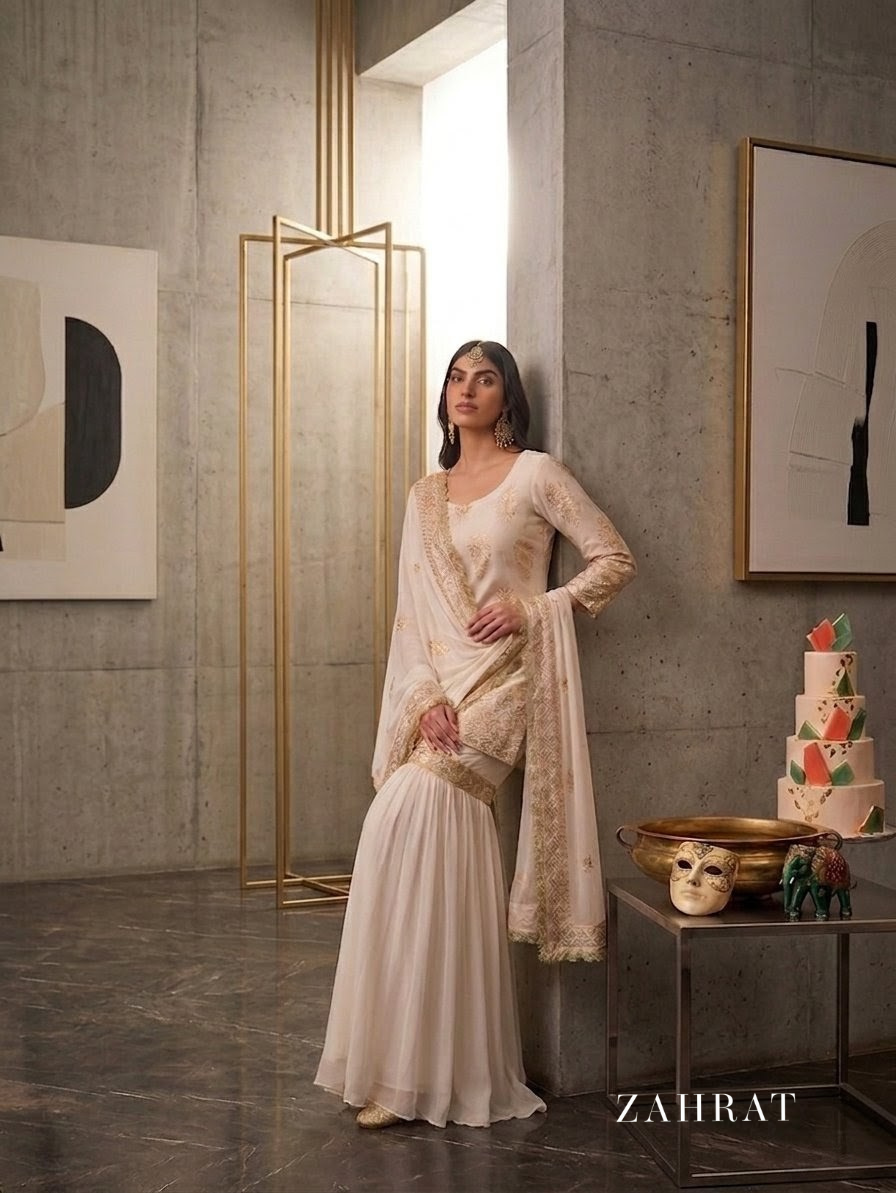
A gharara is a traditional Mughal-era outfit that originated in Lucknow, the heart of Nawabi culture in India. It is a two-legged ensemble where the pants are divided but appear like a flowing skirt.
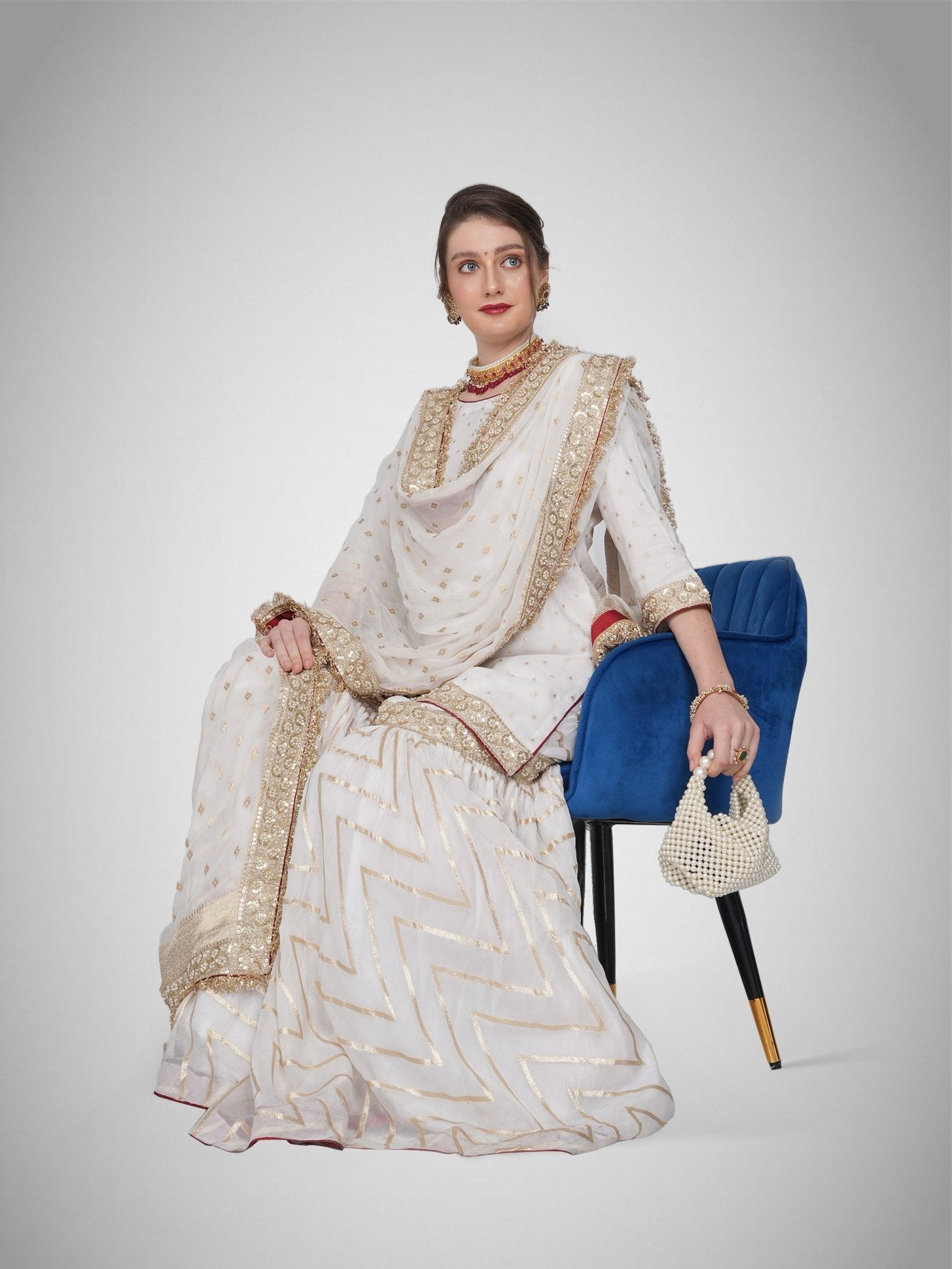
Each leg of the gharara is structured till the knees, not tight or fitted as many believe. The knee area is stitched with a band called “gotta” or “band”, which gives the outfit its signature structured look. Below this point, the fabric flares out dramatically, often with gathers or pleats, creating a graceful and royal flow when you walk.
So, while some people think a gharara is fitted till the knees, the truth is that traditional Lucknowi ghararas are loose yet structured till the knees, not body-hugging. This unique tailoring gives the gharara both comfort and shape, making it one of the most elegant silhouettes in South Asian fashion.

A gharara dress typically includes three pieces:
- A short kurti or long top — fitted or slightly flared.
- The gharara pants — structured till the knees and flared below.
- A dupatta — often heavily embellished or delicately embroidered.
Depending on the fabric and design, gharara dresses can be made from silk, chiffon, georgette, banarasi brocade, or organza. Embellishments like zari, gota patti, sequins, and mirror work are often used to enhance the regal look.
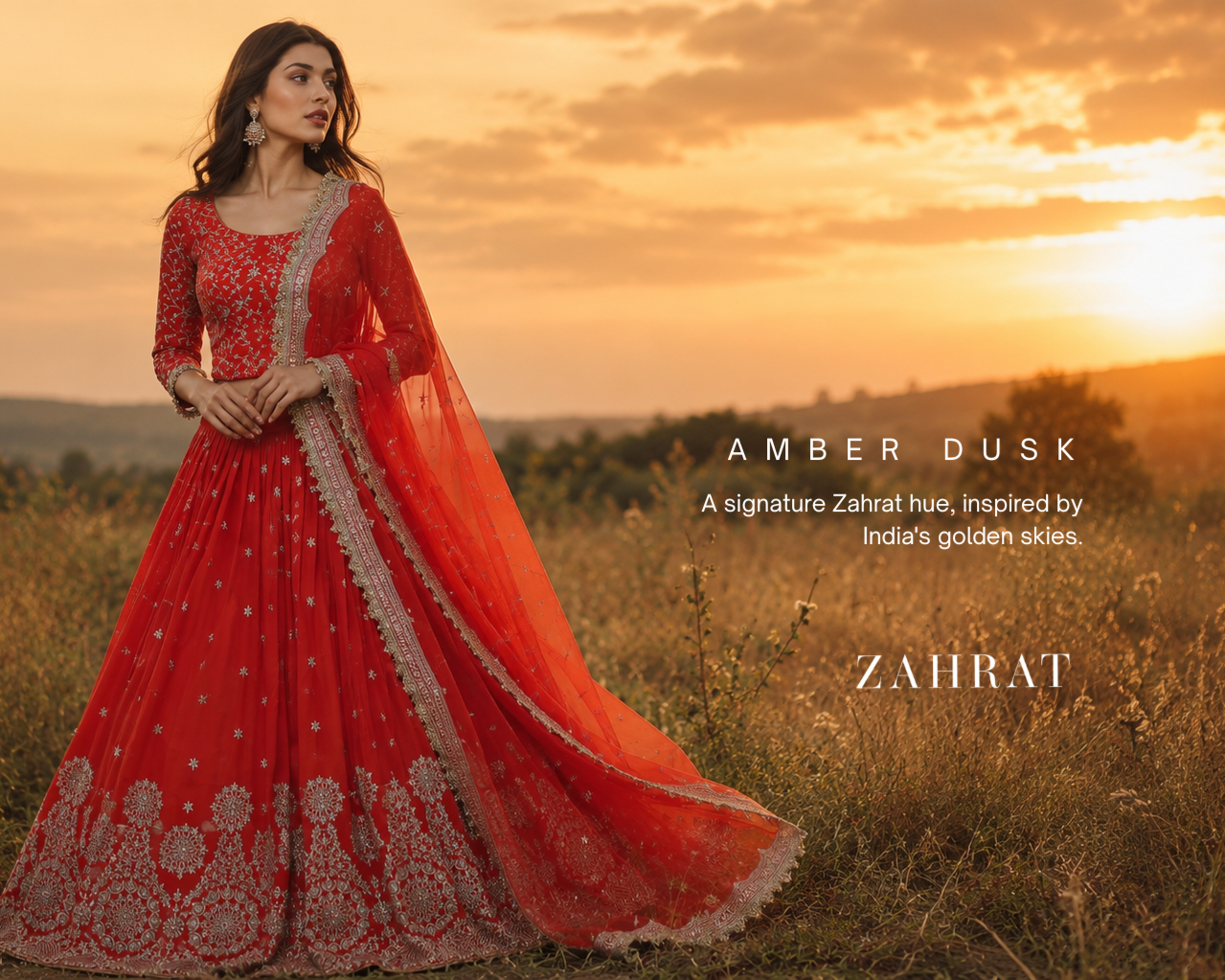
Today, designers and brands such as Zahrat are reimagining the gharara with modern touches — softer pastel shades, contemporary embroidery, and lighter fabrics that blend heritage with modern fashion.
The sharara and gharara may look similar at first, but they differ in how they’re stitched.
A sharara is completely flared from the waist — like a wide-legged palazzo pant or long skirt. It doesn’t have the structured knee joint that the gharara has.
In contrast, the gharara is structured till the knees with a joint or band, and the flare starts below it. This design gives the gharara a more defined shape and royal movement.
So, if you’re wondering what is the difference between sharara and gharara — the key lies in the stitch at the knees.

Here’s a simple way to remember the difference between sharara and gharara:
| Feature | Sharara | Gharara |
|---|---|---|
| Origin | Mostly from Mughal fashion, adopted widely in India & Pakistan | Originated in Lucknow, India during the Mughal era |
| Stitching | Flared from waist down, no joint at the knees | Structured till the knees, with a joint or band (gota) |
| Fit | Flowy like a skirt or wide pants | Structured yet loose till the knees, flared below |
| Dupatta Style | Usually worn with a long kurta or peplum top | Worn with a short kurti and an elaborate dupatta |
| Occasions | Party wear, festivals, semi-formal events | Bridal wear, weddings, traditional ceremonies |
Both are equally elegant, but the gharara gives a more traditional and regal appearance, while the sharara feels slightly more modern and flowy.
The dupatta completes the beauty of a gharara. Here are a few popular ways to drape it:
1. One-Shoulder Drape: Drape the dupatta over one shoulder and let it flow down — simple yet elegant for modern looks.
2. Front Pleated Drape: Pin pleats neatly across the front and drape evenly on both arms for a balanced bridal look.
3. Head and Shoulder Drape: Ideal for brides — cover your head slightly and let the dupatta fall gracefully over the shoulder.
4. Double Dupatta Style: Pair two dupattas — one over the head and another across the shoulders for a royal farshi gharara or bridal gharara look.
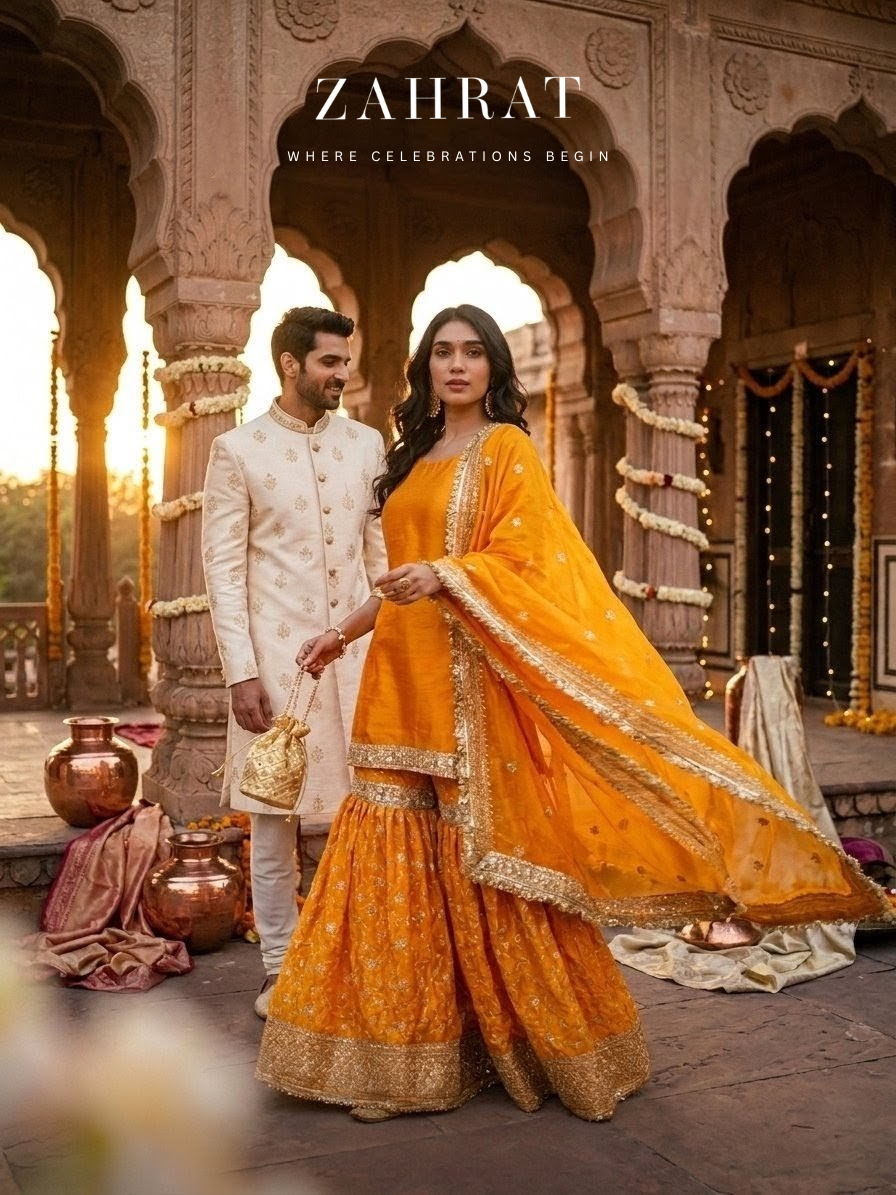
For inspiration, look at how Zahrat’s gharara collection styles the dupatta — elegant, modern, and easy to wear.
There are many gharara designs that evolved over centuries. Each type reflects a unique cultural and regional influence:
Farshi Gharara:
The word farshi means “floor.” This style has a long trail that touches the floor and spreads out beautifully as you walk. Popular during the Mughal period and among Lucknowi brides.
Banarasi Gharara:
Made from rich Banarasi brocade silk, this type shines with intricate zari weaving. It’s perfect for weddings and festive occasions.
Chatapati Gharara:
Known for its colorful panels (called chatapati), this gharara has contrasting shades stitched together, creating a playful yet elegant look.
Pakistani Gharara:
Often more ornate, with heavy embroidery, mirror work, and long kurtas. It’s a popular choice for weddings and formal events in Pakistan.
Bridal Gharara:
A heavily embellished version, often in red, gold, ivory, or pastel tones. Brides often choose bridal ghararas for a royal, timeless look.
White Gharara:
Soft, elegant, and modern — a white gharara is perfect for engagement or festive wear. It can be styled with silver or pastel accents for a fresh, minimal vibe.
Modern Gharara Sharara Dress:
A fusion of old and new — lightweight fabrics, pastel hues, crop tops, and subtle embellishments make this style perfect for parties and contemporary weddings.
Just like ghararas, there are many versions of the sharara dress too:
Layered Sharara: Multiple layers of fabric give a voluminous, skirt-like appearance.
Panelled Sharara: Made with several stitched panels for a rich, flowy silhouette.
Georgette Sharara: Lightweight and easy to carry — perfect for parties and festive events.
Bridal Sharara: Heavy embroidery, beads, and sequins, often paired with long jackets or dupattas.
Today, ghararas have made a big comeback in fashion weeks, celebrity weddings, and festive wardrobes. Designers and brands like Zahrat are reinterpreting these outfits in softer colors, minimal embroidery, and fluid fabrics.
You can now find modern gharara sharara dress designs that are easy to wear, comfortable, and perfect for everything from party wear to weddings. Whether it’s a banarasi gharara, chatapati gharara, or a white gharara, each piece celebrates tradition with a modern touch.
The difference between sharara and gharara may seem small, but it represents two distinct styles with deep historical roots. The gharara, structured yet graceful, symbolizes royal elegance from the Nawabi era, while the sharara reflects effortless modern glamour.
From the farshi gharara of old Lucknow to the modern gharara sharara dress by contemporary brands like Zahrat, these timeless outfits continue to define the essence of South Asian fashion — graceful, regal, and forever in style.