Total: Rs. 0.00
Taxes and shipping calculated at checkout


Choosing a wedding saree is not just about fabric or trend—it’s about how you want to feel on one of the most meaningful days of your life. Grandeur or softness. Tradition or modernity. Heirloom weight or effortless elegance.
Among wedding sarees, three names dominate conversations across India and globally: Kanjeevaram, Banarasi, and Organza. Each carries a distinct emotion, history, and visual language.
This guide breaks down the real differences, helps you choose the right saree for each wedding function, and explains which fabric aligns best with your celebration style.
Origin: Tamil Nadu
Fabric: Pure mulberry silk with zari borders
Best for: Wedding rituals, main wedding ceremony, heirloom pieces
Kanjeevaram sarees are synonymous with royalty and tradition. Known for their weight, bold contrasts, and architectural borders, they are designed to last generations.
- Heavy silk that holds structure beautifully
- Rich temple motifs and traditional symbolism
- Ideal for sacred wedding rituals
- Heavier to wear for long hours
- Less fluid compared to Banarasi or Organza
Best suited for: Brides who want a deeply traditional wedding look and value legacy over trend.

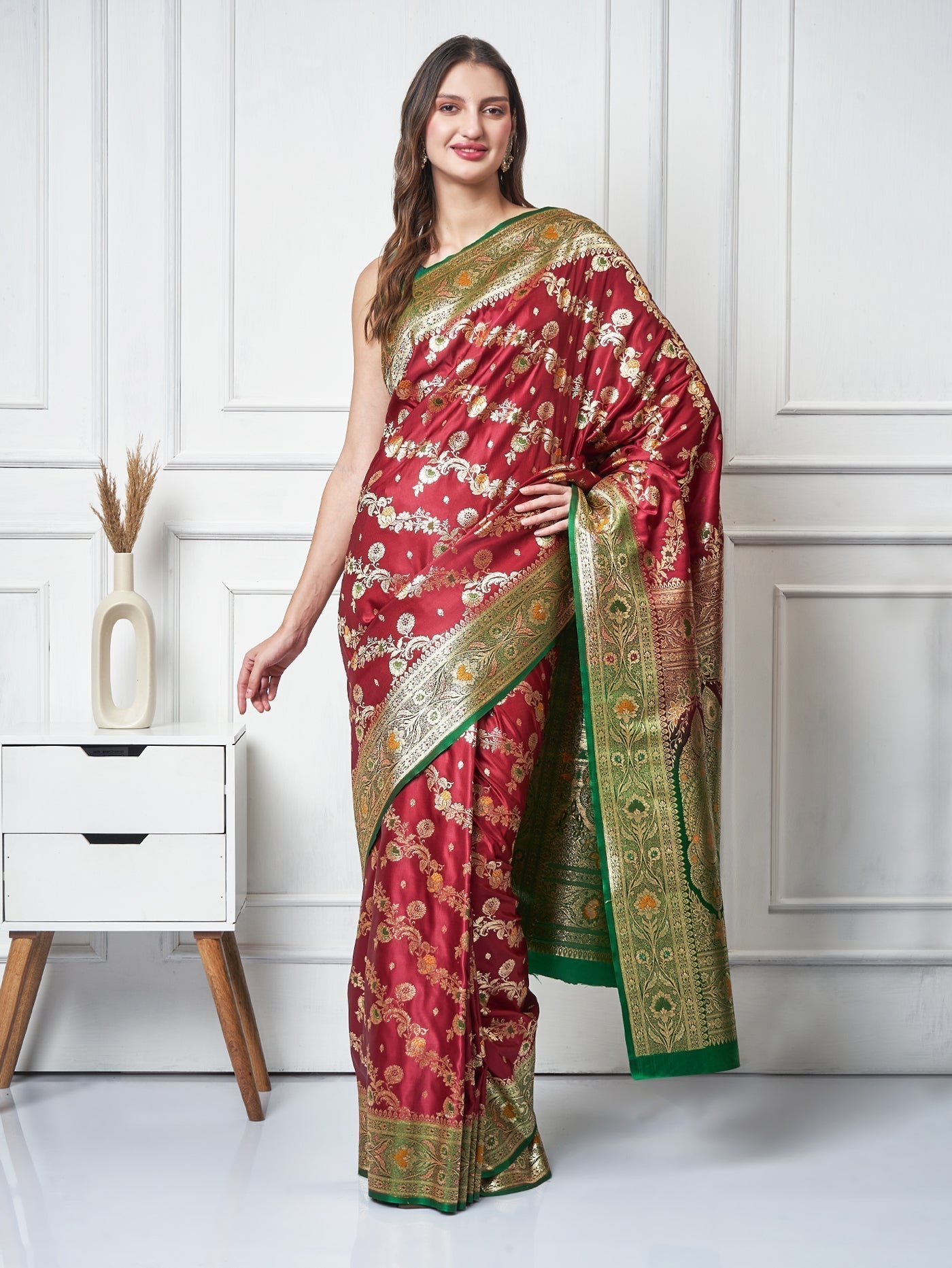
Gulrukh — Crimson Royale by Zahrat.
A designer Banarasi wedding saree showcasing intricate zari craftsmanship and refined bridal elegance.
Origin: Varanasi, Uttar Pradesh
Fabric: Silk woven with zari, often lighter than Kanjeevaram
Best for: Wedding pheras, receptions, formal celebrations
Banarasi sarees are known for their ornate weaves, floral jaals, and Mughal-inspired artistry. They strike a perfect balance between grandeur and wearability.
- Luxurious without excessive weight
- Intricate detailing that photographs beautifully
- Suitable for both traditional and modern brides
- Quality varies widely—authentic craftsmanship matters
Best suited for: Brides who want a rich yet graceful wedding saree that feels timeless but not overpowering.
Origin: European roots, now reimagined by Indian designers
Fabric: Crisp, sheer silk or silk-blend organza
Best for: Mehendi, engagement, daytime weddings, modern receptions
Organza sarees represent quiet luxury—lightweight, fluid, and refined. They don’t rely on heavy embroidery; instead, they shine through texture, subtle embellishment, and silhouette.
- Extremely lightweight and breathable
- Perfect for daytime or destination weddings
- Elegant, minimal, and versatile
- Less traditional presence
- Requires thoughtful styling
Best suited for: Brides and wedding guests who prefer understated elegance over heavy ornamentation.
| Feature | Kanjeevaram | Banarasi | Organza |
|---|---|---|---|
| Weight | Heavy | Medium | Very Light |
| Look | Regal & Traditional | Opulent & Romantic | Soft & Contemporary |
| Best For | Wedding rituals | Wedding & reception | Pre-wedding & daytime |
| Wearability | Structured | Fluid | Effortless |
Ask yourself:
- Is this a ritual-heavy ceremony or a celebration-focused event?
- Will I be wearing the saree for several hours?
- Do I want tradition, modern elegance, or a blend of both?
Many brides today choose multiple sarees across events—a Kanjeevaram or Banarasi for the wedding, and Organza for lighter functions.
At Zahrat, wedding sarees are curated with a philosophy of thoughtful design, limited quantities, and timeless elegance.
Rather than mass production, Zahrat focuses on:
- Select Banarasi and Organza sarees designed for weddings
- Elegant palettes that transcend trends
- Pieces meant to be worn, remembered, and cherished
Each saree is created for women who seek meaning, comfort, and quiet luxury in their wedding attire.
There is no single “best” wedding saree—only the one that aligns with your story, your ceremony, and your sense of self.
Whether you choose the regal presence of Kanjeevaram, the romantic richness of Banarasi, or the modern softness of Organza, the right saree is the one that makes you feel completely yourself.
Which saree is best for a wedding?
Banarasi and Kanjeevaram sarees are ideal for traditional weddings, while Organza works beautifully for modern and daytime celebrations.
Is Banarasi saree suitable for wedding ceremonies?
Yes, Banarasi sarees are among the most popular choices for wedding ceremonies due to their rich craftsmanship and manageable weight.
Can Organza sarees be worn for weddings?
Organza sarees are perfect for pre-wedding events, receptions, and destination weddings where comfort and elegance are key.
Which saree fabric is best for brides?
It depends on the wedding style—Kanjeevaram for tradition, Banarasi for balanced luxury, and Organza for contemporary elegance.