Total: Rs. 0.00
Taxes and shipping calculated at checkout


Written by Syed Misbahuddin
Founder, Zahrat

"Civilizations are remembered by what they create."
Rome gave the world roads that connected empires.
Greece gave humanity philosophy that shaped thought.
Japan transformed simplicity into an art form.
Italy turned craftsmanship into a language of luxury.
And India?
India wove its soul into fabric.
For thousands of years, Indian textiles travelled farther than armies.
Before passports existed, our silks crossed borders.
Before brands existed, our artisans built reputations.
Before luxury became an industry, India had already mastered its essence.
Our cotton reshaped global trade.
Our weaves travelled across oceans.
Our embroideries adorned palaces, royal courts and collections of people who understood they were not purchasing fabric.
They were preserving history.
Because Indian textiles were never just garments.
They carried stories.
Stories of patient hands working through generations.
Stories of artisans who inherited knowledge not from books, but from families.
Stories of communities where a single motif could carry centuries of memory.
A thread was never just a thread.
It was heritage.
It was identity.
It was a connection between the past and the future.
Yet somewhere along the journey from civilisation to commerce, something extraordinary happened.
One of the world's oldest and richest traditions of craftsmanship was reduced to two simple words:
Ethnic wear.
A category.
A label.
A limitation.
And perhaps the greatest irony is this:
The very qualities the world now searches for in luxury — authenticity, craftsmanship, heritage, rarity and meaning — have existed in Indian fashion for centuries.
The world did not discover these values.
India preserved them.
The problem was never the craftsmanship.
The problem was the story.
For too long, Indian fashion was presented as something reserved for festivals, weddings and cultural occasions.
But luxury was never created by occasions.
Luxury was created by emotion.
By artistry.
By the feeling that something belongs to you — and to generations before you.
An Italian suit is not called traditional European clothing.
French couture is not described as ethnic fashion.
They are recognised as luxury.
Not because their craftsmanship is greater.
But because their stories have been told differently.
Perhaps it is time for India's story to be told with the same confidence.
Because Indian elegance does not need reinvention.
It needs to be seen differently.
The Woman Who Changed the Narrative
Luxury has always evolved with the people who wear it.
Every generation creates its own definition of elegance.
And today, a new kind of woman is changing the conversation.
She is globally connected, but deeply rooted.
She builds companies.
Leads teams.
Creates ideas.
Travels across continents.
Moves comfortably between boardrooms, airports, galleries and celebrations around the world.
She has never seen her identity as a choice between two worlds.
She does not believe she must become less Indian to become more global.
For generations, women were often told that modernity meant moving away from tradition.
That success meant adopting a more universal identity.
That global acceptance required cultural compromise.
But something has changed.
The modern Indian woman no longer seeks permission to belong.
She belongs wherever she stands.
A black evening gown at a charity gala in London would never require an explanation.
But when she chooses a saree, the conversation often begins with a question:
"Where does it belong?"
Perhaps the more important question is:
"Why should it not belong everywhere?"
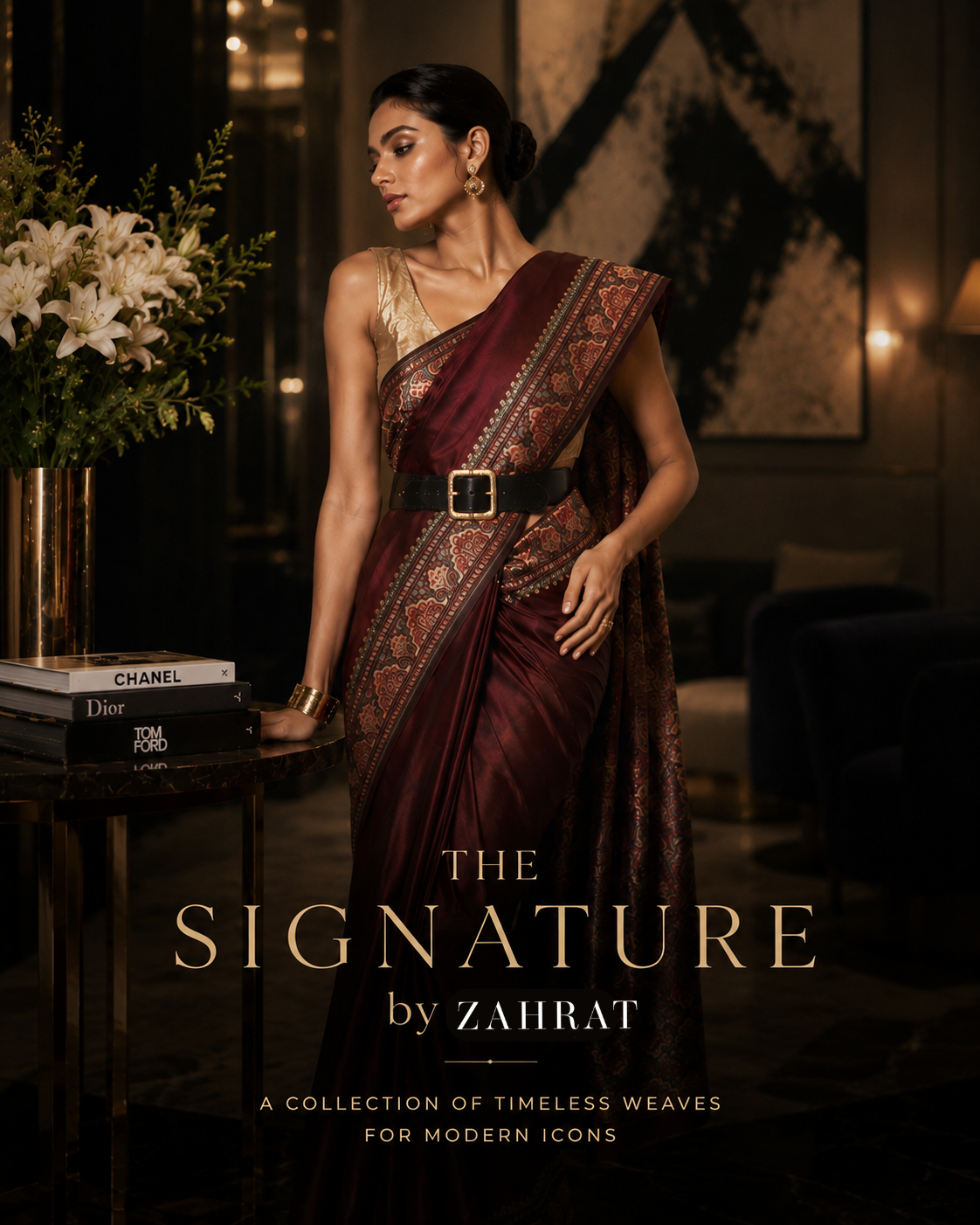
Because a saree at an art opening in Paris is not a symbol of nostalgia.
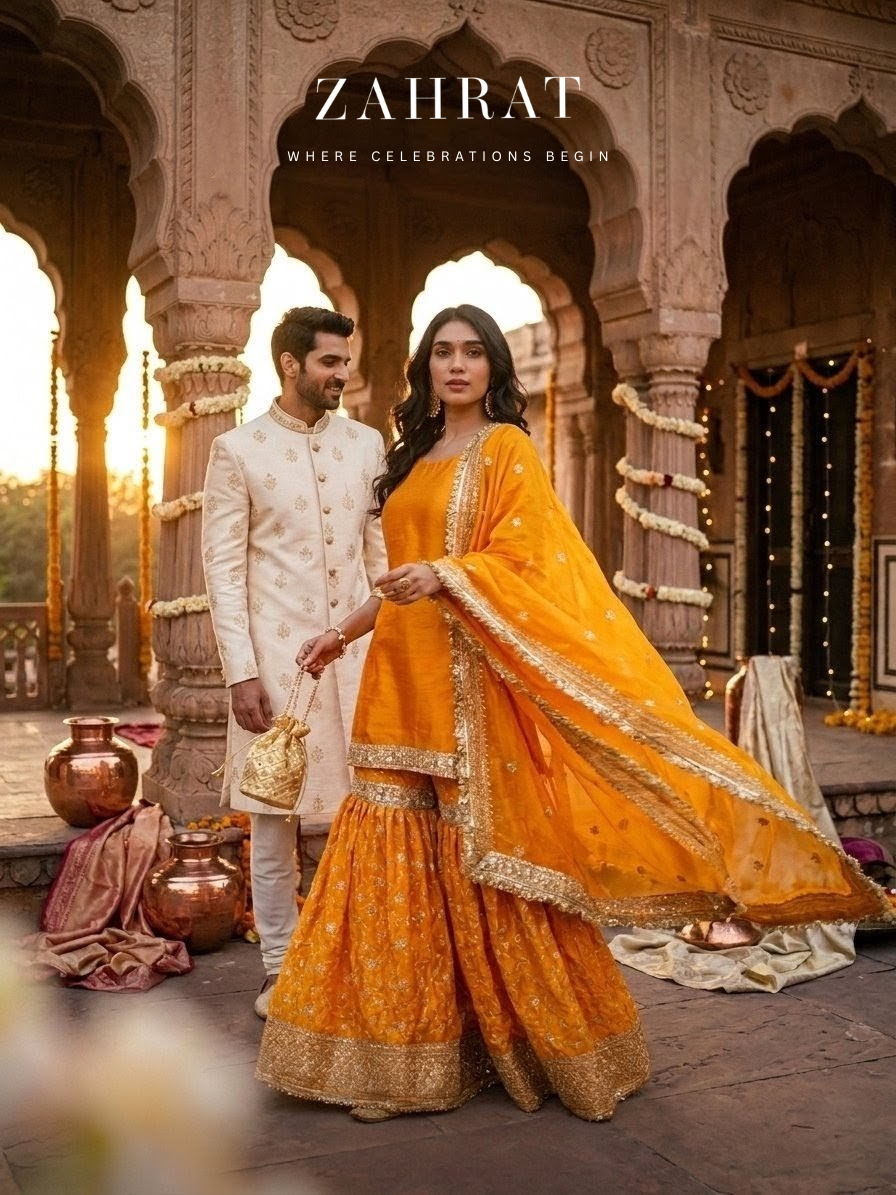
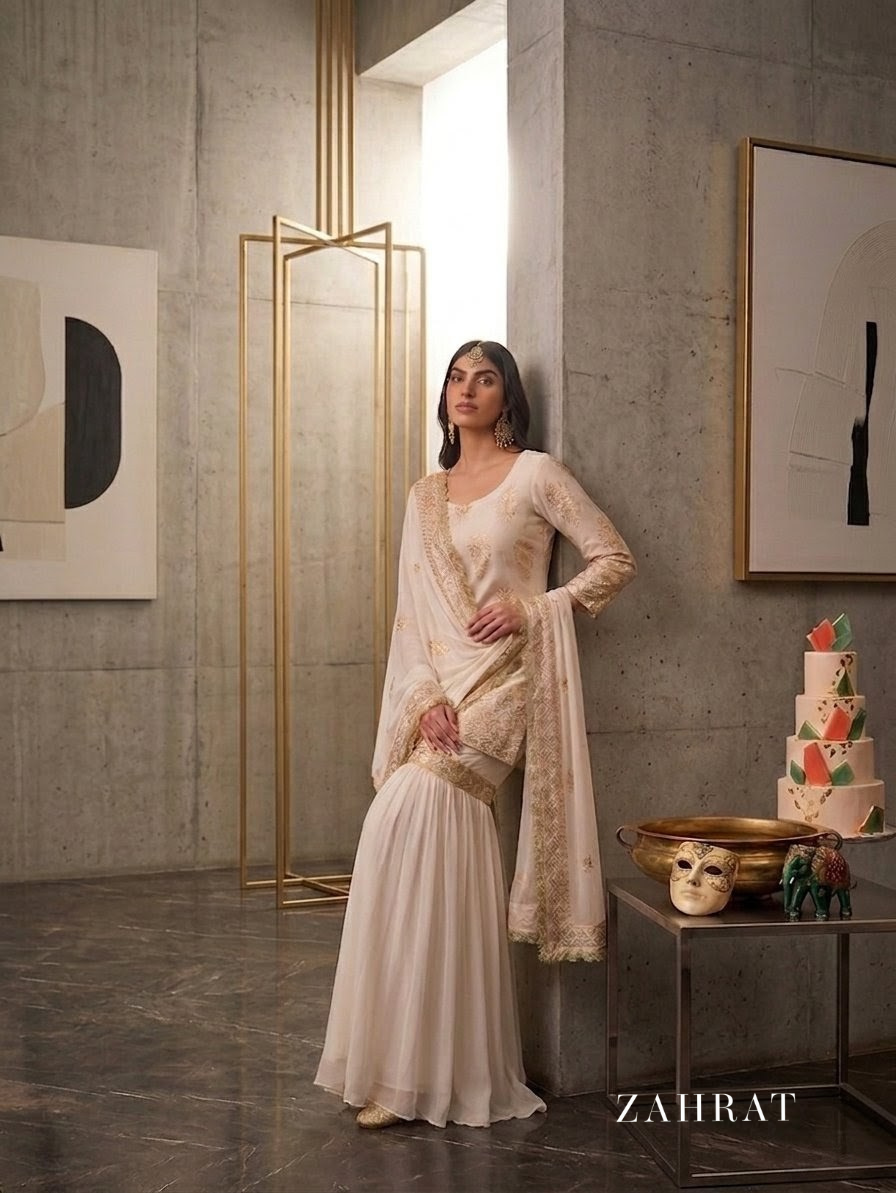
A gharara at a celebration in Dubai is not a reminder of the past.
Indian craftsmanship at a global gathering is not a cultural exception.
It is simply excellence.
She does not wear Indian fashion because tradition demands it.
She wears it because it represents her.
Her journey.
Her confidence.
Her story.
She is not dressing to be noticed.
She is dressing because she knows who she is.
She no longer asks:
"Will I fit in?"
She asks:
"Why should I disappear?"
And that quiet confidence is changing the way the world sees Indian elegance.

Luxury Is Changing
Luxury has always reflected what society values.
For decades, luxury was defined by visibility.
The biggest logos.
The newest collections.
The fastest trends.
The idea that more meant better.
But the world is entering a different era.
The most discerning consumers are no longer searching for things that simply attract attention.
They are searching for things that hold meaning.
A garment is no longer valuable because it is seen by everyone.
It is valuable because it speaks to someone.
Craftsmanship is replacing excess.
Heritage is replacing novelty.
Authenticity is replacing imitation.
The future of luxury belongs to objects with a soul.
Pieces created with patience.
Pieces shaped by human hands.
Pieces that carry a story long after the moment they are first worn.
And this is where India's greatest strength becomes its greatest opportunity.
The qualities the luxury world is rediscovering today are qualities India has protected for centuries.
The patience of the artisan.
The discipline of craftsmanship.
The beauty of imperfection.
The richness of heritage.
The power of a story passed from one generation to another.
Perhaps Indian fashion has not changed.
Perhaps the world has simply arrived at a place where India has always been.
A place where meaning matters.
Where craftsmanship matters.
Where authenticity matters.
A place where luxury is not about having more.
It is about owning something that matters.
This Is Where Zahrat Begins
Every meaningful brand begins with a belief.
Ours is simple.
Indian craftsmanship deserves to stand confidently among the world's great luxury traditions.
For me, this belief became impossible to ignore.
Zahrat was created from this conviction.
Not simply to create occasionwear.
But to present Indian elegance through a contemporary lens — one that respects its heritage while speaking to the woman of today.
Every collection begins with one question:
How do we honour centuries of artistry while designing for the woman shaping tomorrow?
The answer is found in every decision.
In silhouettes that move effortlessly from New Delhi to New York.
In handcrafted details that reveal themselves through closer appreciation.
In limited-edition creations because true luxury has never belonged to mass production.
In colours inspired by nature, emotion and memory rather than fleeting trends.
In designs that remain unmistakably Indian while feeling at home anywhere in the world.
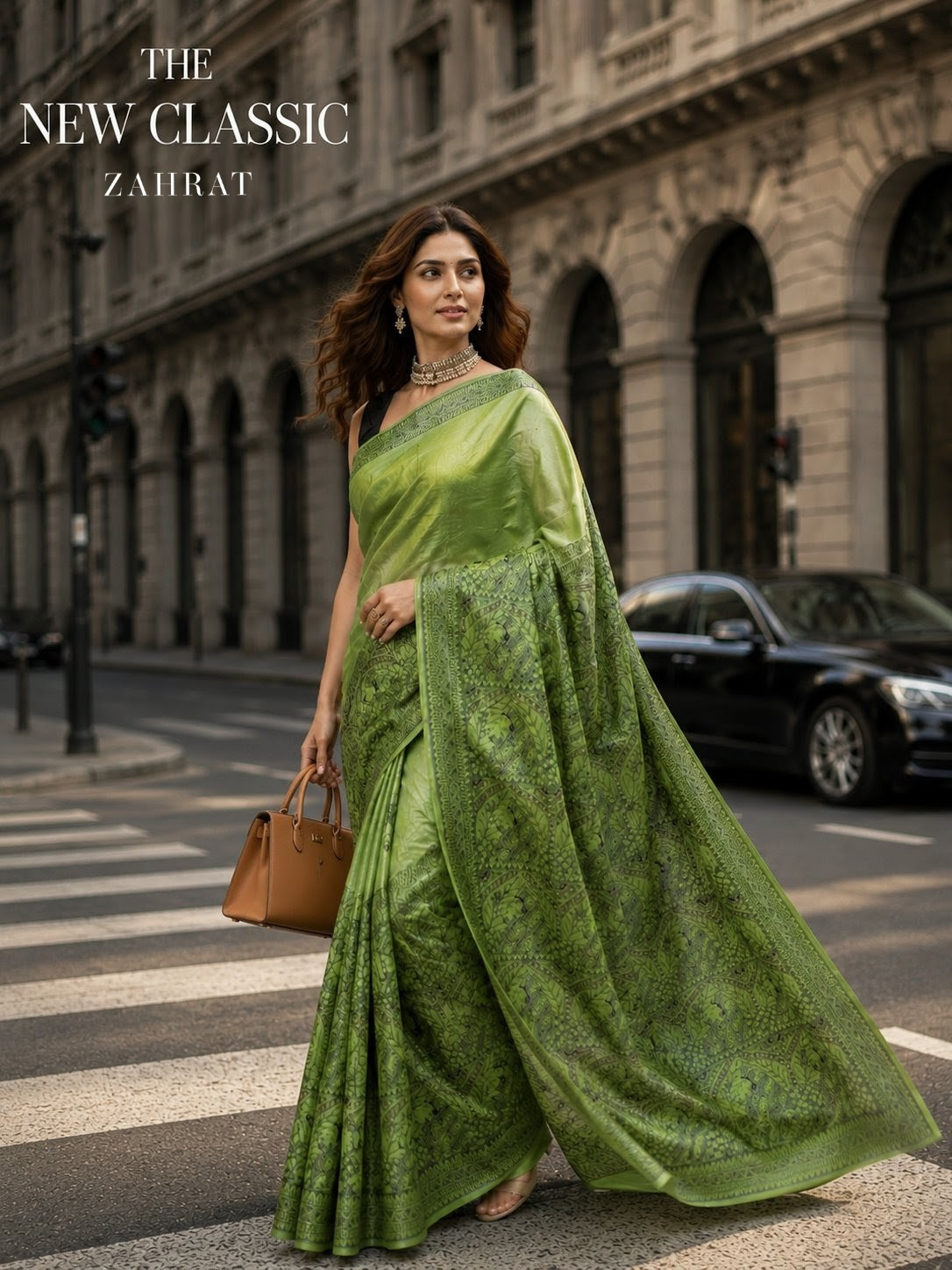
Whether it is our New Classic Collection, inspired by the storytelling traditions of Madhubani art, the elegance of our timeless Sarees, or one of our signature Ghararas, every piece reflects the same philosophy:
Indian elegance belongs wherever elegance is celebrated.
Where Zahrat Travels
The measure of a garment is not where it is made.
It is where life takes it.
A creation is not complete when it leaves the atelier.
That is where its journey begins.
Today, Zahrat pieces are becoming part of personal stories unfolding across continents.
A Mehendi overlooking the Pacific in California.
An Eid celebration in Chicago.
A Nikah in Toronto.
A cultural evening in Singapore.
A reception in London.
A destination wedding in Tuscany.
A milestone celebration beneath the Dubai skyline.
Different places.
Different moments.
One shared connection.
Every parcel leaving our atelier carries more than carefully folded fabric.
It carries craftsmanship.
Identity.
Memory.
A small piece of India becoming part of someone else's story.
Years later, the photographs will remain.
The celebrations will become stories.
And perhaps, one day, a child will ask:
"Where did this beautiful saree come from?"
And through that simple question, another generation will discover Indian craftsmanship.
Not through a museum.
Not through a history book.
But through a memory.
That is what enduring luxury does.
It becomes part of life.
It lives on.
The New Classic
Fashion changes.
Culture endures.
The New Classic is not a return to the past.
It is the moment when everything timeless finds a new expression.
Indian elegance does not need reinvention.
It needs to be seen with the confidence it has always deserved.
A saree belongs as naturally at an art opening in Paris as it does at a wedding in Lucknow.
A gharara deserves admiration not because it is traditional, but because it is exceptional.
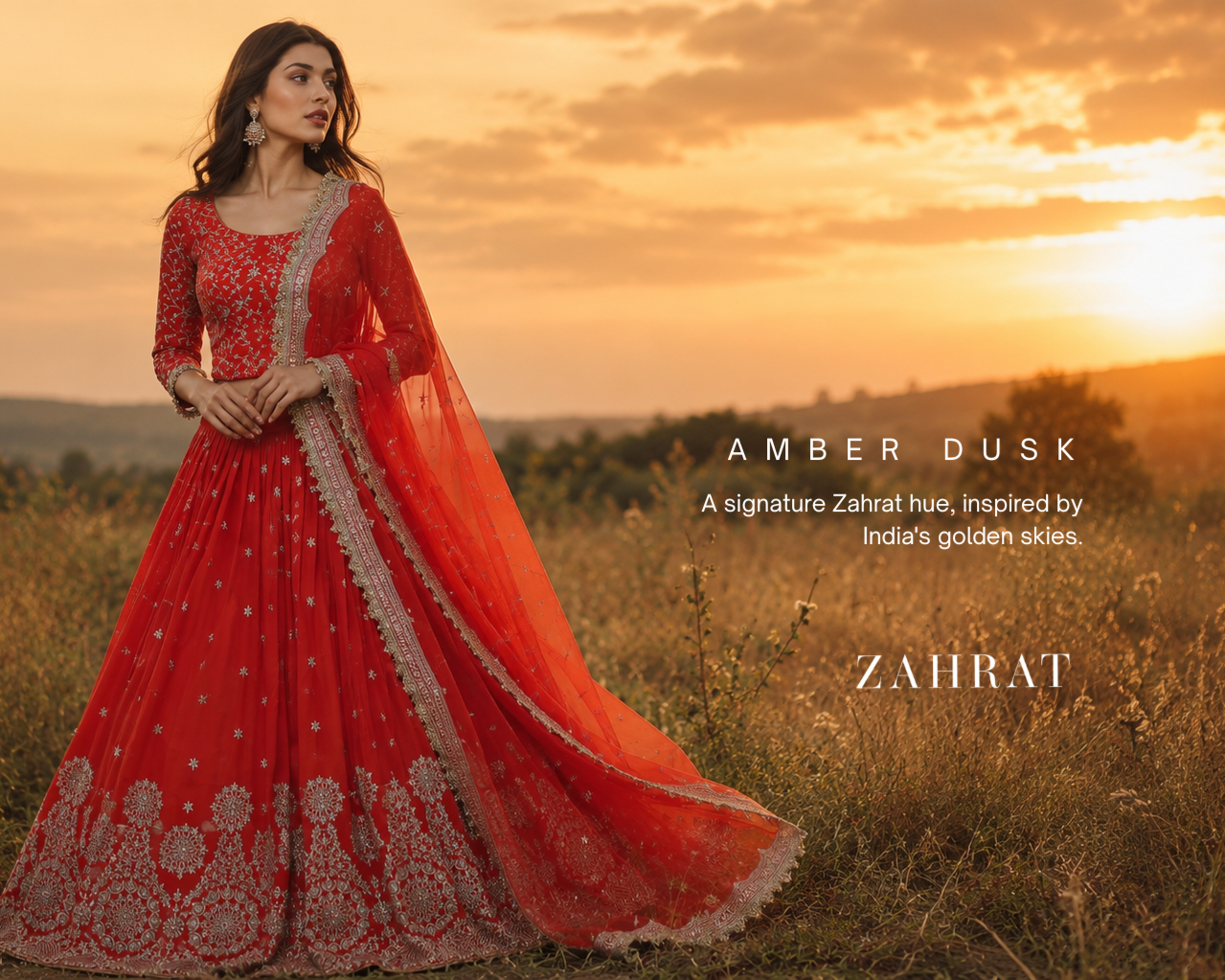
A lehenga stands as a masterpiece of craftsmanship, worthy of the world's finest stages.
Because the most powerful expressions are not created for a moment.
They are created to outlive it.
The story of Indian elegance was never waiting to be discovered.
It was always being written.
Zahrat — carrying that story forward.