Total: Rs. 0.00
Taxes and shipping calculated at checkout


Ghararas are more than just a traditional outfit — they are a symbol of grace, heritage, and evolving Indian fashion. Once rooted deeply in royal courts and celebratory traditions, ghararas have today re-emerged as a modern wedding and festive essential, loved for their elegance, comfort, and statement appeal.
This guide takes you through everything you need to know about ghararas — from their origins and classic styles to modern interpretations, fabrics, and styling ideas for today’s woman.
The gharara traces its origins to the Mughal era, particularly in regions like Lucknow and parts of North India. Traditionally worn by women of royal and noble families, ghararas were crafted with meticulous hand embroidery, luxurious fabrics, and distinctive silhouettes.
The defining feature of a classic gharara is its knee-joint seam, where the fabric flares dramatically below the knee, creating volume and movement. Over time, ghararas became an integral part of wedding attire, especially for Nikahs, festive occasions, and cultural celebrations.
While lehengas later dominated mainstream bridal fashion, ghararas never truly disappeared — they simply evolved, waiting for a modern revival.
Although often used interchangeably, ghararas and shararas are structurally different:
- Sharara: Flows freely from the waist without a knee seam, offering a softer, continuous flare.
Ghararas are known for their architectural shape and regal presence, while shararas feel lighter and more relaxed. Choosing between the two depends on the look you want — structured elegance or effortless flow.
Richly embroidered with zardozi, gota, or resham work, these ghararas are paired with short kurtas and ornate dupattas. Ideal for brides and close family members.
Designed with cleaner lines, subtle embellishments, and lighter fabrics, modern ghararas are perfect for contemporary weddings and intimate celebrations.
These feature restrained embroidery, pastel or solid colours, and breathable fabrics — ideal for daytime events, mehendi functions, or home celebrations.
Limited-edition designs with signature craftsmanship, unique colour palettes, and thoughtful detailing. These pieces are often created in small quantities, making them special and exclusive.

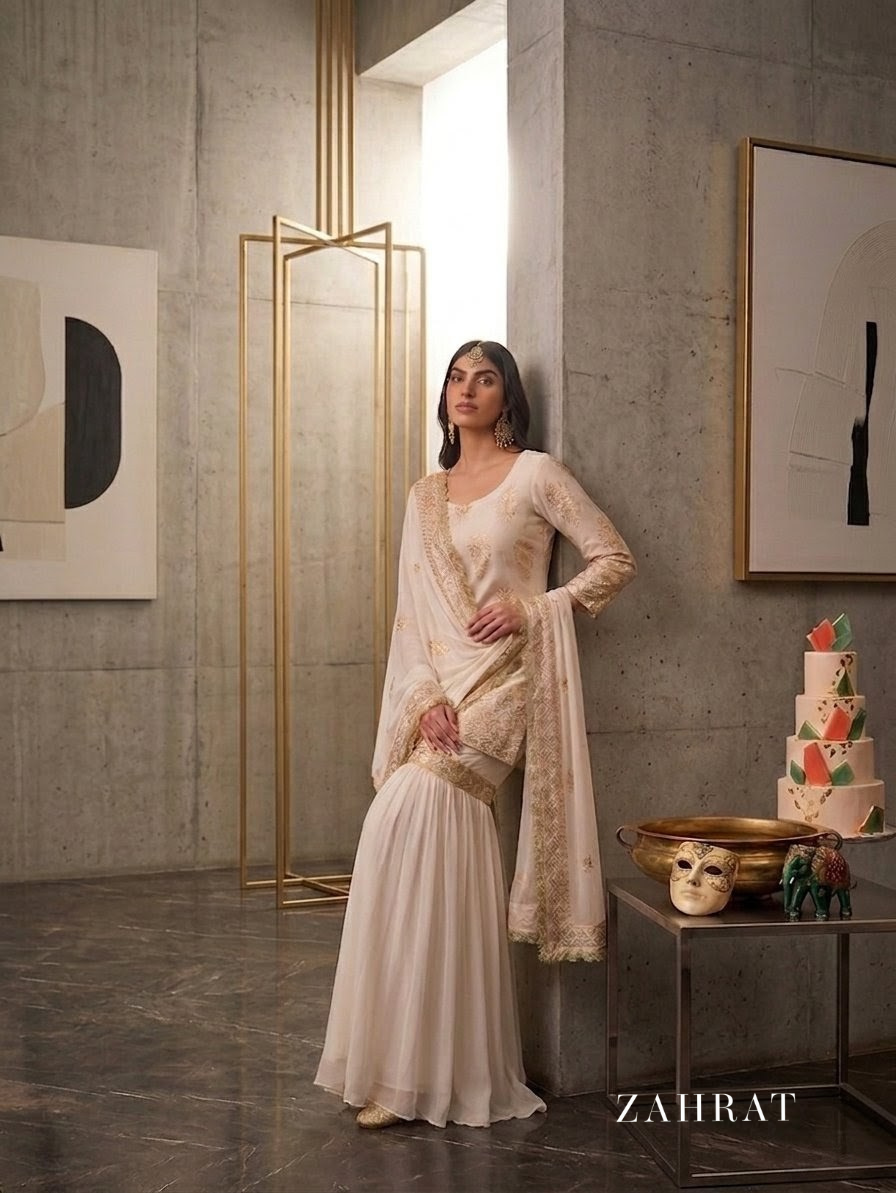
A Modern Interpretation: The Mehroza Gharara by Zahrat
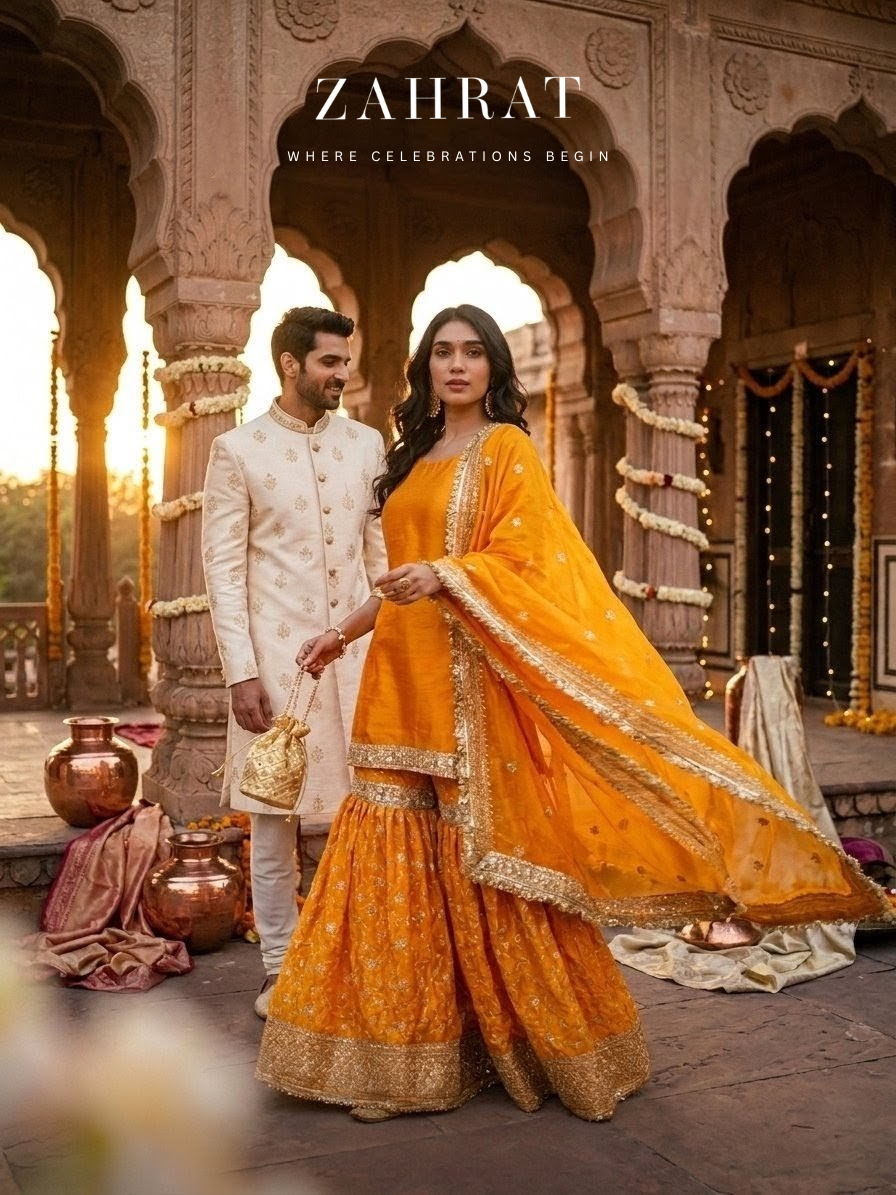
The Mehroza Gharara reflects how the traditional silhouette can be reimagined for today’s celebrations. Designed with a clean, structured fall at the knee and a graceful flare below, it balances heritage with ease. Crafted in a lightweight fabric with refined detailing, Mehroza is created for fashion-forward moments — modern weddings, intimate festivities, and occasions where contemporary elegance takes centre stage.
The fabric defines not just the look, but also the comfort of a gharara.
Modern ghararas increasingly focus on balancing heritage fabrics with lighter layers to maintain elegance without excessive heaviness.
Opt for lighter colours like marigold, pastel pinks, soft greens, or ivories. Minimal embroidery and easy silhouettes work best.
Choose richer tones, fluid fabrics, and a bit of sparkle. Silver or tonal embroidery adds elegance without overpowering the look.
Classic silhouettes, detailed craftsmanship, and timeless colours like ivory, gold, rust, or jewel tones make for a striking bridal or ceremonial look.
Modern ghararas with clean lines, statement dupattas, or contemporary cuts create a refined yet festive appearance.
- Footwear: Heels or embroidered juttis work best to complement the length and movement of the gharara.
Today’s women are looking for outfits that feel meaningful, versatile, and comfortable — without compromising on elegance. Ghararas offer exactly that.
They are perfect for brides who want something distinctive, for festive dressing that stands out, and for those who appreciate craftsmanship over mass production.
Modern ghararas blend heritage with ease, making them relevant for today’s weddings and celebrations.
At Zahrat, ghararas are designed with a thoughtful balance of tradition and modernity. Each piece focuses on:
- Lightweight, breathable fabrics
- Elegant, wearable embroidery
- Limited-edition designs
- Timeless silhouettes for modern celebrations
Zahrat ghararas are created for women who value comfort, craftsmanship, and individuality — pieces meant to be worn, remembered, and cherished.
Ghararas are not just a trend; they are a return to graceful dressing rooted in heritage yet shaped for today. Whether you’re attending a wedding, celebrating a festive moment, or looking for something special beyond the usual lehenga, a gharara offers timeless elegance with modern ease.
As Indian fashion continues to evolve, the gharara stands tall — regal, relevant, and beautifully enduring.